Workforce InsightsWorkforce Management Strategies
From “me” to “we”: How collaborative leadership drives frontline success
January 30, 2026
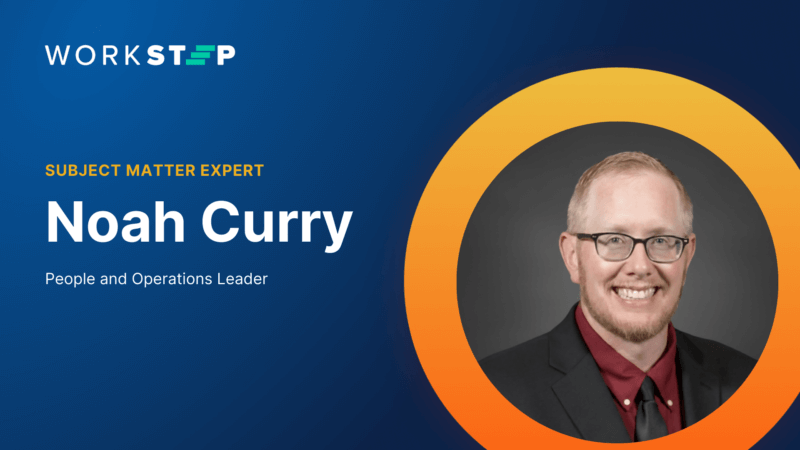
A conversation with Noah Curry, People and Operations leader
What if the secret to effective operations management wasn’t about controlling every shift, but empowering every teammate? That’s the philosophy Noah Curry lives by.
With over 26 years of experience in hospitality operations, from line cook to regional leader, Noah has shaped his leadership model around one simple belief: great operations start with “we,” not “me.”
The “We Not Me” operating model
Noah’s leadership approach is rooted in the “We Not Me” mindset, a principle borrowed from sports, adapted for the kitchen, and now used to scale success across frontline industries. “In the ‘me’ model, a manager solves a problem. In the ‘we’ model, the team owns the solution,” Noah shared. This shift is more than philosophy; it’s a frontline operations platform in action. Cross-training, open dialogue, and shared wins become standard, even during peak chaos.
One example? A server jumping behind the bar, not because they were told to, but because everyone’s win depends on the shift running smoothly. That’s not just collaboration. That’s culture.
5 Ways to build a “we not me” culture on your frontline
- Start every shift with a listening loop
Use pre-shift huddles to ask your team: What’s breaking today? This simple ritual opens a dialogue and invites collaboration from the get-go. - Cross-train for resilience
Treat cross-training as a collective survival strategy. When everyone can flex, silos disappear, and the team wins together. - Celebrate shared wins, not solo hustles
Recognize teams for how they supported each other during the rush, not just for individual metrics like upsells or ticket times. - Empower local action, don’t mandate compliance
Instead of handing down top-down fixes, encourage each location to identify solutions that work for their specific environment, as long as it aligns with your culture of care. - Swap the clipboard for a coffee cup
Make feedback personal. Sit with your employees. Ask them what’s hard. Commit to removing obstacles. This builds trust faster than any dashboard ever could.
Scaling collaboration without micromanagement
For Noah, the challenge wasn’t just building one great team, it was scaling operational excellence across multiple locations. The key? “Decentralized command,” he explained. “Every location knows what winning the day looks like, so I don’t have to be there to watch them do it.”
Noah’s playbook includes two non-negotiables: clear KPIs and daily communication. He implemented daily team talks where frontline teams identify their own roadblocks, empowering teams to problem-solve rather than waiting for top-down directives.
WorkStep’s continuous listening tools reflect this same philosophy: empowering frontline leaders with real-time feedback, predictive analytics, and the tools to take targeted, local action.
Real outcomes: Engagement, retention, and resilience
When teams are invited to co-own the outcomes, the impact is tangible. “Our turnover dropped significantly. People went above and beyond, not for bonuses, but for each other,” Noah said. The ripple effects included higher guest satisfaction, lower labor waste, and a massive spike in resilience.
A culture you can scale
Noah’s biggest lesson from his rise through the ranks? You can’t scale a personality, but you can scale a culture. “As a manager, I had to be the hero. As a director, I had to become a guide,” he explained. Today, his leadership focus is on guiding teams toward self-sustaining collaboration.
WorkStep’s real-time coaching and continuous listening capabilities make that possible for companies at scale. By turning feedback into action and measuring the impact of each initiative, WorkStep empowers leaders to make engagement more than a metric. It becomes a movement.
What leaders can do this quarter
Noah’s advice for HR and Operations leaders? “Stop doing top-down reviews. Start doing bottom-up listening.” He suggests a single question: What is one thing I’m doing that makes your job harder? It’s vulnerable, but powerful. It signals trust. It builds community. And it moves you one step closer to “we.”

Kayla Pimentel, | kayla@workstep.com
Kayla Pimentel serves as a Demand Generation Associate at WorkStep. Leveraging her diverse background in sales and marketing, she is enthusiastic about sharing insights about how to make the frontline a better place to work.